I have some wonderful news to share with you and this time I can finally show you something I've been dreaming about for so long… my printed book has arrived and I couldn't be happier with how it turned out!
If you have been following my book writing adventure through Instagram or my newsletters, you probably remember that I was waiting for the first printed copy to arrive so I could check the colors, photographs, layout and all those little details I had spent so much time working on.
Well, the moment finally came and opening that parcel was quite an experience!
After so many months of finalizing the pages on my computer, making changes and carefully arranging every little detail, it feels almost surreal to finally hold the finished book in my hands. All those pages that had lived on my screen for so long had become something I could touch.
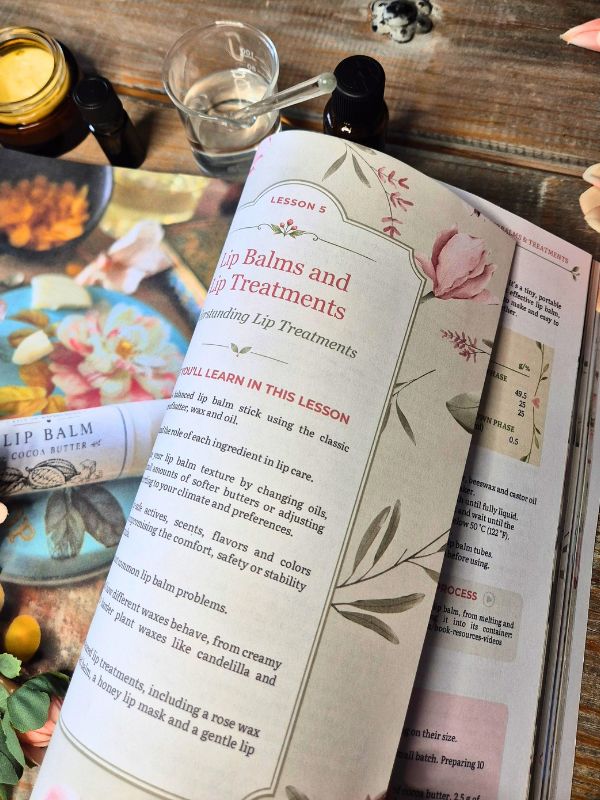
And I have to admit that seeing the result made me very happy. The photographs, the colors, the delicate decorative details, the way the lessons and formulas look on paper... everything finally came together in the way I had imagined.
I wanted the printed book to feel like a little extension of Lily in WonderLab, with the same love for nature, science, creativity and beautiful details that I try to bring into everything I share here.
Now that I've inspected it and I'm happy with the result, I can officially confirm that both the printed book and the Kindle edition will be released on November 26, 2026!
But before that day arrives, I'd love to invite you to take a little look inside, because I think showing you the actual book is the best way to explain what I've been creating all this time.
Take a look inside my book
When I started working on How to Formulate Natural Cosmetics, I knew I wanted to create something that could geanuinely guide you through the fascinating world of cosmetic formulation, helping you understand what happens inside your beakers rather than simply giving you instructions to follow.
Over time, that idea grew into a complete natural DIY cosmetics course in book form, with theory, practical lessons, experiments and formulation exercises, plus advanced recipes and reference material that you can continue using long after you've finished reading.
I imagined someone opening the book with very little experience, curious about making their first cosmetics but perhaps feeling overwhelmed by all the ingredients, percentages and technical information they find online.
But I was also thinking about those of you who already make cosmetics and would love to understand your ingredients better, improve your formulas, experiment with new textures or feel more confident when customizing a recipe.
For this reason, the book is designed as a progressive learning journey. You can follow it as a course, taking your time to understand each new concept and experiment with the formulas, and later keep it beside you as a practical reference for your own creations.
Let me show you how I organized it.
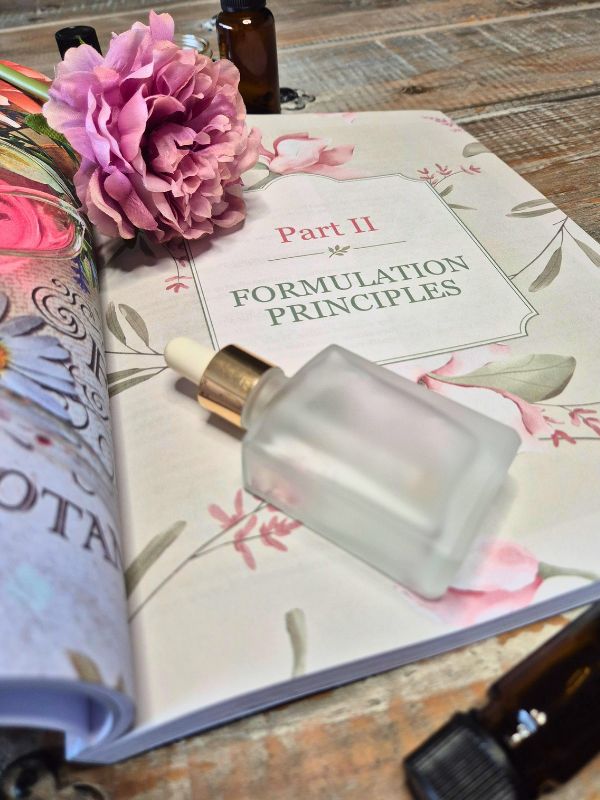
First, let's prepare your little WonderLab
Before we start making cosmetics, I think it's important to understand what we're working with and why certain formulation rules matter.
This is why the first two parts are dedicated to the foundations of natural cosmetic formulation, preparing you with the knowledge you'll need throughout the practical lessons.
We explore the ingredients commonly used in natural cosmetics, their different functions and properties and how to choose them. We also look at some of the principles that make a formula work, like solubility, percentages, formulation phases, temperature, pH, preservation and oxidation.
Safety has a very important place here too, because understanding how to work hygienically, preserve a cosmetic correctly and use ingredients within safe concentrations is essential when we want to create products that are both performant and responsibly formulated.
And, of course, there is room for the more personal and creative side of cosmetic making!
I love the idea of turning a small corner of your home into a place where you can slow down, observe, investigate and enjoy the process of making something with your own hands.
These first chapters are there to help you build that foundation, so that when we move on to the practical part, the ingredients and techniques begin to make more sense.
Your starter kit with everything you need to begin
Before moving on to the practical lessons, I've also prepared a carefully planned starter kit shopping list with the ingredients and tools you'll need to make all the foundation formulas from the eight lessons.
I know how tempting it can be to buy all sorts of interesting ingredients when you're starting your own little lab, but I also know how quickly those purchases can add up, especially when you're still discovering what you actually need.
That's why I spent time selecting ingredients that can be used across several formulas, keeping the list as practical and economical as possible without limiting what you'll be able to learn and create. This way, you can build your first collection of ingredients thoughtfully, avoid buying unnecessary materials and make the most of what you already have.
Eight lessons to learn cosmetic formulation through practice
After the theory, we move into what is probably my favorite part: creating cosmetics!
The practical course is divided into eight lessons, each dedicated to a different family of cosmetic preparations.
We begin with simpler water based products, such as toners, and continue with gels, oils and serums, botanical extracts, infused oils and salves, lip balms and treatments, body butters, scrubs and finally creams.
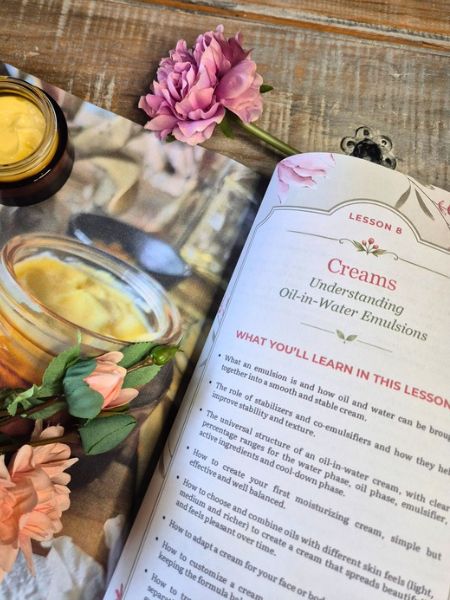
I chose this progression carefully because every lesson introduces something new while giving you opportunities to apply what you've already learned.
When we make a gel, we can investigate how changing the concentration of a thickening gum affects the final texture. When we work with oils, we can explore how different combinations influence spreadability, absorption and the feeling they leave on the skin. And when we reach emulsions, we'll bring together many of the concepts we've explored in previous lessons to understand how water and oil can become a cream.
The theory is there, of course, but you'll also have plenty of opportunities to put it into practice, helping you understand how cosmetic formulation actually works.
Each lesson includes explanations of the ingredients and techniques, foundation formulas to work from, ideas for customization, troubleshooting guidance and exercises that encourage you to experiment and observe the results.
My hope is that, as you progress, you'll begin looking at cosmetic formulas differently. Instead of wondering whether you can replace an ingredient simply because you don't have it, you'll start asking what that ingredient does, which properties matter and what might happen if you change it.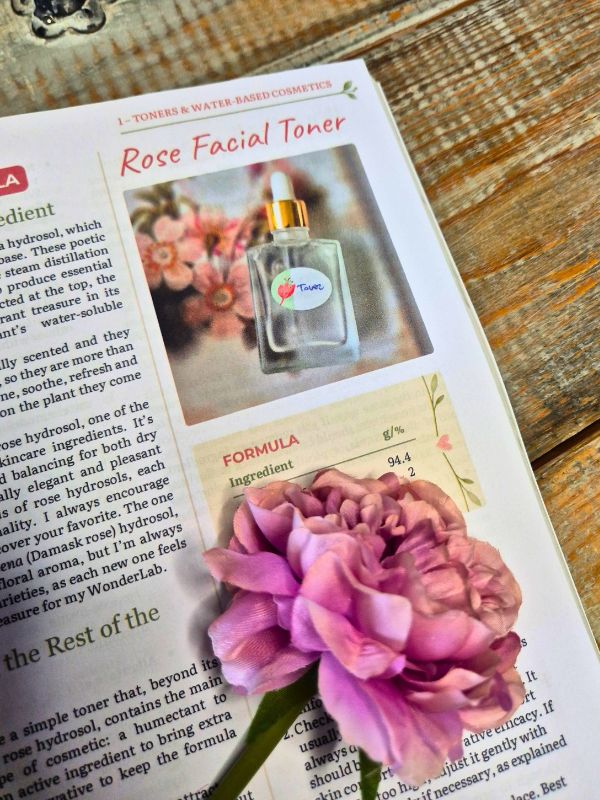
There's more to explore when you're ready
Another aspect I particularly wanted to include is the possibility of continuing to learn beyond the foundation formulas.
Throughout the lessons, you'll find more advanced formulations and opportunities to experiment further, applying the concepts you've learned to cosmetics with additional ingredients, techniques or formulation challenges.
I also wanted the book to be useful for those of you who have already been making cosmetics for some time. Perhaps you already know how to make a lip balm or an emulsion, but you'd like to understand how to improve its texture, select ingredients more thoughtfully or investigate why a formula isn't behaving as expected.
There is always something new to learn and I think that curiosity is what makes cosmetic formulation such a wonderful and rewarding activity.
A reference guide to keep beside you
I didn't want the learning experience to end when you reached the final lesson, so I also included reference tables and practical information that you can return to while working on your own formulas.
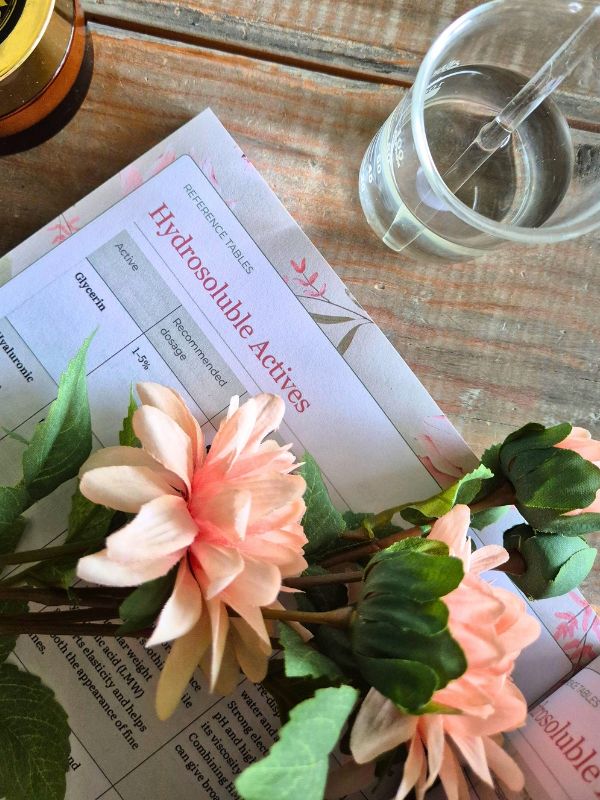
You'll find tables covering cosmetic oils and emollients, water-soluble and oil-soluble active ingredients, essential oils and other useful formulation information.
I imagine these pages becoming particularly helpful when you're comparing ingredients or trying to understand which options might work best for the result you have in mind.
Sometimes, when I'm creating a formula, I like to have all the information I need close to me so I can concentrate on the creative process without constantly interrupting myself to search for something. This is the kind of practical companion I wanted this book to become.
Extra resources for your own WonderLab
Alongside the book, I've also prepared a collection of downloadable formulation tools and educational resources.
These include:
- An advanced version of my Ingredients Tracker, where you can organize and keep track of your raw materials
- The Formula Percentage & Batch Size Calculator, to help you work with percentages and different batch sizes
- My Cosmetic Ingredients Encyclopedia, a resource to help you study and organize ingredient information
- Printable ingredient reference table that you can keep at your worktable.
You'll also find links to video demonstrations showing some of the techniques covered in the lessons.
Printed book or Kindle ebook? Let's look at the differences
Now that I can finally show you the printed book, I also want to explain something important about the two editions, because the educational content is the same, but the visual experience is quite different.
Both editions contain the complete course, with the same lessons, formulas, theoretical explanations, exercises, advanced formulations and reference material. Readers of both editions also have access to the additional resources.
The difference lies mainly in how the content is presented.
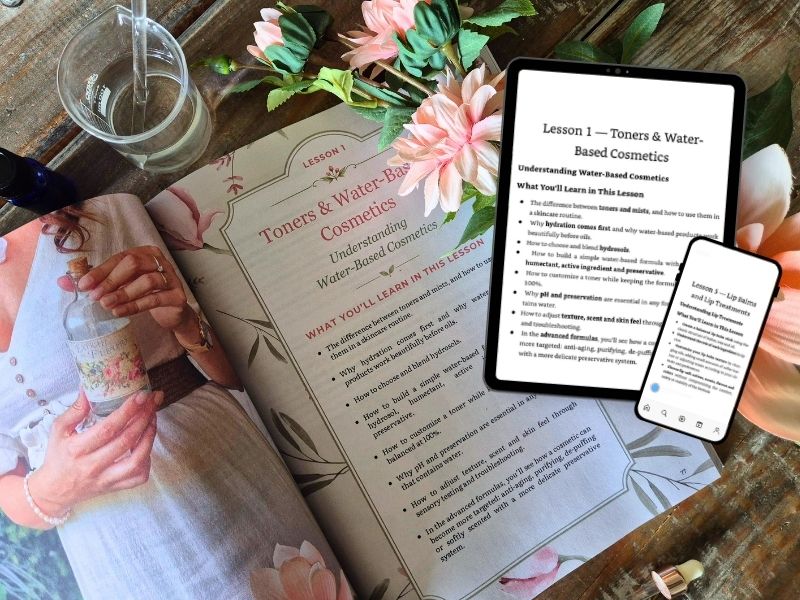
The printed book: the complete visual Lily in WonderLab experience
The printed edition is a large-format book, measuring 8.5 × 11 inches (approximately 21.6 × 27.9 cm), which gave me plenty of space to create the page designs I had imagined.
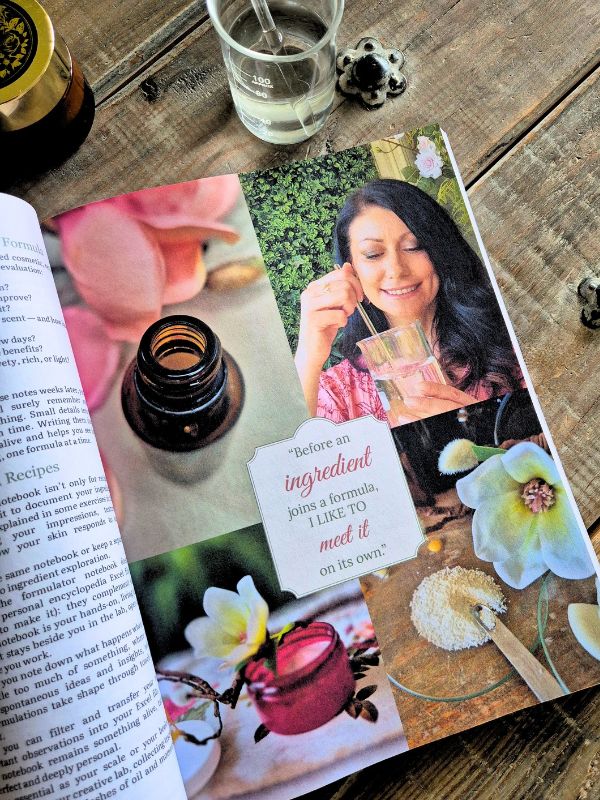
I've used my photographs, soft colors, little botanical decorations, carefully arranged formulation boxes and visual details that help organize the information while giving the book a warm and inviting atmosphere.
You know how much I love beautiful things, and how strongly I believe that learning and creating can also be a sensory experience. I wanted to bring a little of that philosophy into the pages, so that opening the book would feel like entering my WonderLab.
And I think there is something particularly lovely about having a physical book that slowly becomes part of your creative space, perhaps with a few bookmarks, notes and little traces of all the experiments you've made while learning from it.
If you love illustrated books and enjoy having a beautiful and practical reference beside you while creating, the printed edition is the one I would personally recommend.
The Kindle ebook: the complete course in a flexible digital format
The Kindle edition was designed with a different priority: making the educational content comfortable to read and accessible on different devices.
Kindle ebooks use a flexible layout that allows you to adjust the text size and adapt the reading experience to your screen. For this reason, the ebook has a much simpler visual presentation, without the extensive photography, botanical decorations and carefully composed page layouts that characterize the printed edition.
I want to make this distinction clear because the photographs I'm sharing in this article show the printed book and I wouldn't want you to expect the Kindle edition to look exactly the same.
With the ebook, you're getting the complete learning content, including the formulas, lessons and reference material, in a format designed primarily for reading and studying. With the printed edition, you're getting that same content together with the full illustrated design and atmosphere I created around it.
Neither choice changes what you'll learn, it simply depends on the kind of reading experience you prefer.
And if you're wondering whether you need a Kindle device to read the ebook, the answer is no! You can use the free Kindle app on compatible phones, tablets and computers.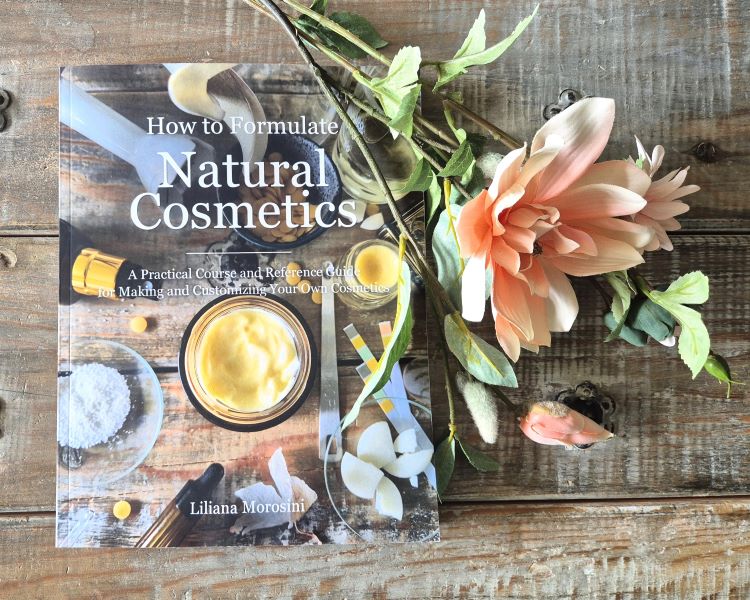
November 26 is almost here!
Now that I've received and approved the printed copy, I can finally confirm that both editions of How to Formulate Natural Cosmetics will be released on November 26, 2026.
The Kindle edition is already available for preorder on Amazon, so if you prefer the digital format, you can reserve your copy now and it will be delivered to your Kindle library on release day.
[Preorder the Kindle ebook on Amazon]
The printed book will be available to purchase on November 26, and I'll share the direct link as soon as it is live.
If you'd like to know why I chose November 26 as the release date, there's a personal little story behind that number, which I shared in my first book announcement.
A little dream that has finally become real
Holding the book for the first time has made me think about how many years of learning, experimenting, teaching and sharing have led to this moment.
I still remember when making cosmetics was something I was discovering for myself, fascinated by how a few carefully chosen ingredients could become a balm, a gel or a cream, and how changing just one little detail could give a completely different result.
That curiosity has never really left me. If anything, it has grown stronger with time, and so has my desire to share what I learn and encourage others to explore this wonderful world with confidence.
Writing this book gave me the opportunity to bring so much of that experience together, to think carefully about how I would explain each concept to someone sitting beside me in my lab, and to create the kind of book I would have loved to have when I was beginning.
Of course, there were moments when the project seemed to grow endlessly, with another explanation to refine, another experiment to include or another little idea I wanted to explore. But I think that was also part of the pleasure of creating something so personal.
And now, seeing all those pages together, I feel that the book truly reflects what Lily in WonderLab means to me: the pleasure of learning, the curiosity to investigate, the beauty of creating with our hands and the wonderful possibilities that open up when nature, science and creativity come together.
For those of you who have followed this journey through my newsletters, Instagram Stories and little behind-the-scenes updates, thank you for being part of it. You've seen this book slowly take shape, and being able to finally share the finished result with you makes the moment even more special.
I hope that one day, as you open these pages in your own little WonderLab, you'll find something that makes you curious, inspires you to try an experiment or helps you understand a formula that once seemed complicated.
And perhaps, somewhere between a beaker, a few precious drops of botanical oil and a notebook full of ideas, you'll discover something wonderful of your own.
November 26 is almost here, and I can't wait for this book to find its place in your WonderLab.
I'd love to know: do you prefer having a beautiful printed book beside you while learning, or do you enjoy the convenience of reading on a screen? Or both?