
Caffeine in DIY cosmetics: benefits, uses and formulation tips
Caffeine is an amazing ingredient for DIY cosmetics, with many more benefits and uses than you might imagine. In fact, you might be surprised to discover that some of its most interesting properties are the ones we hear the least about, rather than those it is most famous for.
Before we start exploring this ingredient, however, there is something important I would like to clarify: I'm not talking about adding your morning coffee to your homemade cosmetics! I know you can find plenty of recipes online suggesting exactly that, but unfortunately, this is a common and unsafe mistake that reflects a lack of cosmetic formulation knowledge.
You might use freshly brewed coffee in a face mask that you prepare and use immediately, but never add regular coffee or homemade coffee infusions to cosmetics you intend to store, such as toners or creams. And no, keeping them in the fridge or simply adding a preservative doesn't automatically make them safe.
Why? Because coffee infusions (and herbal teas in general) are perishable preparations that can contain microorganisms and impurities, oxidize over time and provide nutrients that encourage microbial growth. Adding them to a cosmetic you intend to keep is like introducing a rotten ingredient into your carefully prepared cream, without knowing how it will affect its stability or preservation.
So, if you want to safely enjoy the benefits of caffeine in your homemade cosmetics, use cosmetic-grade caffeine, a fine and inexpensive white powder. It is odorless, so it won't give your cosmetics a coffee scent.
And if you do love the aroma of coffee, take a look at my DIY cosmetics guide for coffee lovers, where I also explore other ways to bring that delicious fragrance into your creations.
What are the benefits of caffeine for skin and hair?
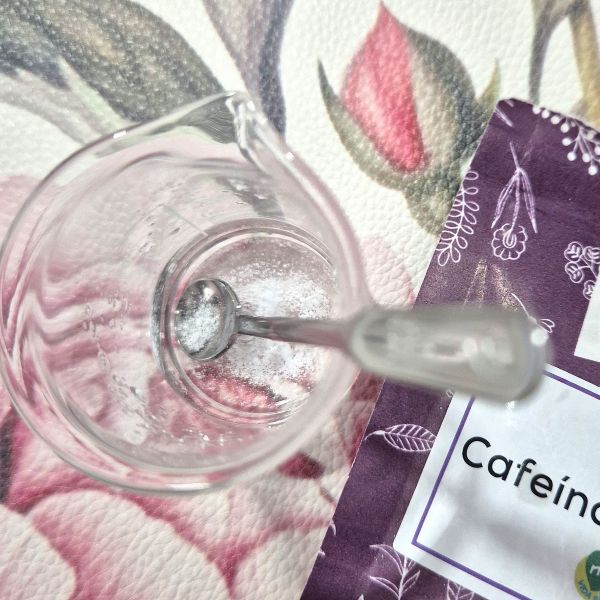
Caffeine has many interesting properties and one of the first I would like to explore is its effect on skin microcirculation.
Caffeine is a vasoactive ingredient, meaning it can influence the activity of blood vessels and local circulation. Microcirculation is the movement of blood through the tiniest vessels in our skin, helping deliver oxygen and nutrients to the tissues and supporting the removal of metabolic waste. This is why a good microcirculation is essential for healthy skin.
Caffeine for puffy eyes, dark circles and dull skin
One of the reasons caffeine is so popular in eye creams and serums is its ability to reduce puffiness and under eye bags, especially in case of fluid retention.
I also find caffeine interesting for dull and tired skin, especially in formulas designed for a fresher appearance. Also, mature skin can experience changes in its microcirculation with age and this is why caffeine is particularly beneficial for this kind of skin.
Apart from these specific benefits, I also like to consider caffeine as a supporting ingredient of the cosmetic actives in a formula.
Healthy microcirculation helps keep our skin supplied with nutrients from within, and this is an important aspect of skin function that we sometimes overlook when focusing exclusively on the ingredients we apply from the outside. Healthy skin is also better equipped to benefit from the cosmetic actives we apply with our cosmetics.
Caffeine for the scalp and hair loss
Another particularly interesting application of caffeine is in scalp treatments. Apart from its effects on local circulation, caffeine can penetrate through the hair follicles and help support hair growth and reduce hair shedding.
This makes caffeine an interesting ingredient for scalp lotions, serums and other hair care treatments.
Does caffeine help with cellulite?
And what about cellulite? This is probably the cosmetic application caffeine is most famous for, as you'll find it in countless anti-cellulite creams, gels and body treatments.
But there is something I always like to remind people: a cosmetic cream cannot make cellulite disappear.
Cellulite is influenced by several factors that a cream cannot simply eliminate. Caffeine is used in these products because of its effects on local circulation and its ability to influence the metabolism of fat cells, but I think it's particularly important to combine caffeine cosmetics with a good cellulite massage. Massage helps improve the appearance of the area by supporting local circulation and fluid movement, making the skin look smoother and cellulite less noticeable.
A body cream formulated with caffeine can be a lovely complement to regular cellulite massage, especially in areas affected by fluid retention, but massage itself is the most important part of the treatment.
Caffeine as an antioxidant
Apart from its vascular effects, caffeine also has antioxidant properties, helping to fight free radicals that cause oxidative stress and premature aging. This makes it an interesting ingredient to include in cosmetics for mature skin.
When should you be cautious with caffeine?
Caffeine is generally well tolerated in cosmetics, but very sensitive or reactive skin may respond differently.
If you have rosacea or a compromised skin barrier, I recommend testing the finished product on a small area first and introducing it cautiously, especially if your skin is already experiencing irritation. If the cosmetic causes burning, stinging or increased redness, don’t use it.
How to use caffeine powder in DIY cosmetics
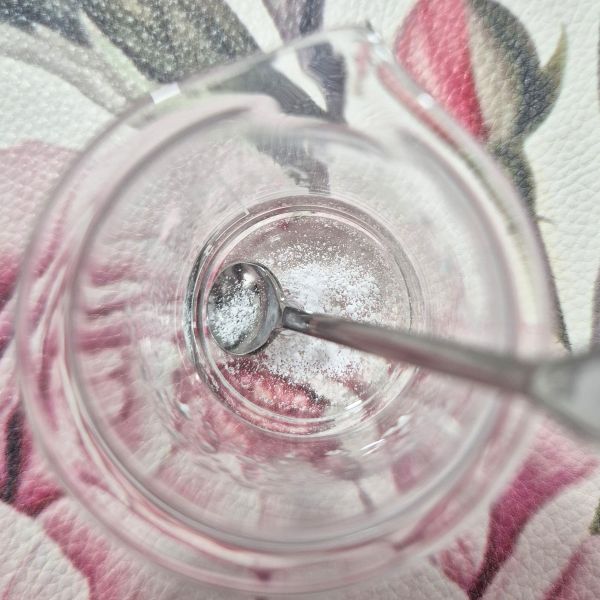
Caffeine powder is water-soluble, so it should be dissolved in the water phase of your formula, preferably at the beginning.
If you're planning to use a gum, you should dissolve the caffeine before hydrating the gum or it won’t dissolve properly.
Caffeine can be heated to around 80°C (176°F), so if you're preparing an emulsion that already requires heating it is not a problem.
When making a face cream, you should not add caffeine powder directly to phase C, when the emulsion has already cooled and thickened, as it won’t dissolve properly at that stage. Instead, add it to the water phase before incorporating any gelling ingredients.
How much caffeine should you use?
The concentration I generally recommend for DIY cosmetics is 0.5–2%, even if caffeine can also be used at higher percentages.
The important thing to remember is that caffeine has limited solubility in water at room temperature. Heating helps it dissolve much faster and allows higher concentrations to dissolve temporarily, but that doesn't necessarily mean they'll remain dissolved once your cosmetic has cooled.
Above 2%, it might recrystallize, especially in formulas with a limited amount of water. I personally tend to use caffeine at 1%, which is a lovely sweet spot.
To see a practical example of how I use it in a cosmetic formula, take a look at my Fresh and Velvety Cream recipe.
A little formulator's trick for dissolving caffeine
And now I have a little trick to share with you!
If you've ever added caffeine powder to water at room temperature, you might have noticed that it can take a while to dissolve, even with continuous stirring. Gentle heating makes the process much quicker and easier.
But what if you're making a toner or another cosmetic that doesn't require a heated phase, or you simply don't want to use a heater or set up a double boiler? And what if, instead of distilled water, you're using a lovely floral hydrosol that you don’t want to expose to unnecessary heat?
In these situations, I like to use a simple warm water bath.
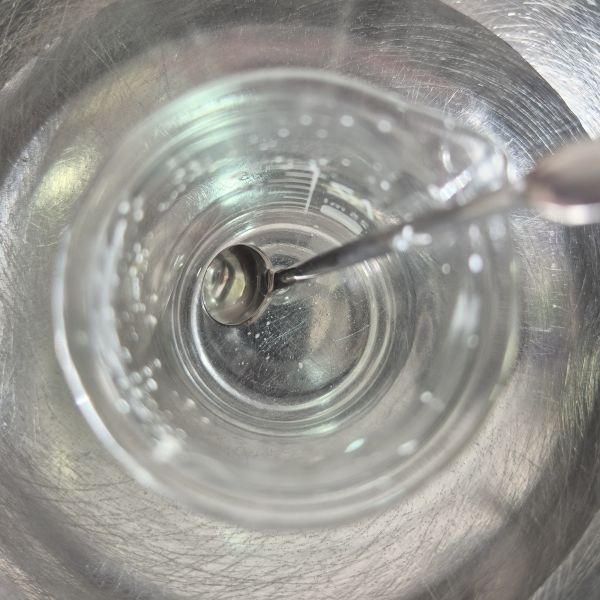
Just fill a container with hot tap water, then place your beaker containing the caffeine and the water or hydrosol inside it, creating a gentle bain-marie. Make sure the bath water stays outside your beaker and doesn't come into contact with your cosmetic ingredients.
The warmth helps the caffeine dissolve without needing to place your preparation directly on a heater or expose the entire formula to high temperatures. Use the thermometer in case you are heating particularly heat sensitive ingredients and remember to check that the caffeine is completely dissolved after your preparation has cooled.
If you want to be especially gentle with your hydrosol and fully preserve its scent and properties, you can also dissolve the caffeine separately in a small portion of warmed distilled water. Then, let it cool and combine it with the remaining ingredients.
Just remember that this water must come from the amount already included in your formula, not be added on top of it, so that the final percentages still add up to 100%. And if you'd like to make working with formula percentages a little easier, one of the downloadable resources included with my book, How to Formulate Natural Cosmetics, is an automatic formula percentage calculator that helps you adjust your formulas and keep everything balanced at 100%.
The sensory side of caffeine
As I explain in my book through the practical exercises I've included in it, whenever we discover and study a new ingredient, I always recommend taking a moment to explore its sensory characteristics.
How does it smell? How does it feel? Will it change the color of my DIY cosmetic? Will it influence the texture or the final experience I have in mind?
These might seem like small details, but they're fundamental if we want to formulate thoughtfully, because the sensory characteristics of an ingredient can influence our final product in both positive and negative ways. Sometimes an ingredient brings a beautiful color or a lovely natural fragrance, while other times its smell or appearance might interfere with the result we have in mind.
Caffeine is wonderfully neutral in this respect. Once properly dissolved, it doesn't add any noticeable color, scent or particular sensory feel to your cosmetics, making it a very versatile ingredient that can be incorporated into many different types of formulas without changing the sensory experience.
I love when an ingredient can naturally add a lovely color or scent to a formula as I explain in my guide to naturally scent your cosmetics. However, sometimes, when you're carefully balancing the fragrance, texture and appearance of a cosmetic with other ingredients, having an active that does its job without interfering with your creative choices is a real advantage.